
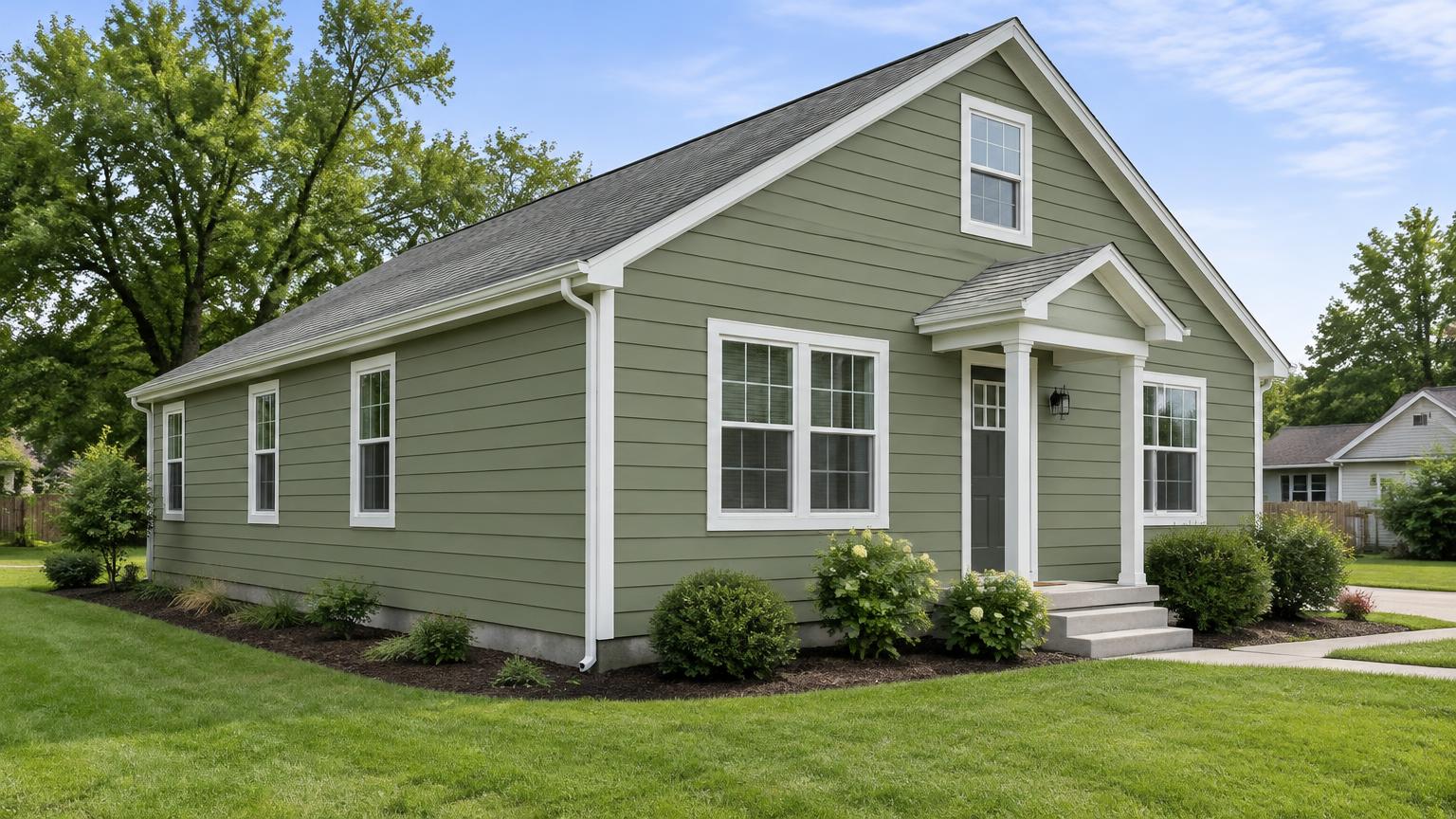
The exterior starts at the wall
Siding Installation in Topeka, KS
New siding changes your home's appearance, but the wall behind it deserves equal attention. Kan Exteriors LLC helps Topeka homeowners compare vinyl, fiber cement and engineered wood with moisture management and upkeep in view.
Three materials, different ownership considerations
Vinyl siding offers a broad selection of profiles and colors, with no routine repainting of the factory-colored surface. Installation needs room for thermal movement and correctly placed fastening. Panels installed too tightly can distort, while loose or broken pieces may expose the underlying wall protection; material choice and workmanship should be considered together.
Fiber cement provides a rigid siding option in lap and other profiles, with finish care and clearances determined by the selected product. Engineered wood uses manufactured wood-based components and can offer a wood-like appearance. Both require appropriate treatment of edges, joints and transitions, and neither should be chosen without reviewing its installation and maintenance instructions.
When the current siding deserves a closer look
Cracked panels, swelling at board ends, recurring paint failure or loose sections are useful reasons to request an assessment. Stains near windows and damp interior wall areas may indicate a water-entry problem beyond the visible siding. Identifying the source matters because covering over damaged material does not make the wall dry or sound.
A limited damaged section may be repairable, although weathering and discontinued profiles can complicate matching. For widespread deterioration, compare a full replacement scope with repeated spot work. The estimate should explain removal, accessible sheathing inspection and how concealed problems will be discussed before additional repairs are authorized.
If wind or hail preceded the exterior damage, request storm inspection and damage documentation.
Water protection behind the finished face
Siding is not the only line of defense against rain. The water-resistive barrier, flashing and drainage details behind it help manage moisture that reaches the wall assembly. Connections around openings, corners and the base of the wall need a coordinated approach, with clearances that keep susceptible materials away from soil and standing moisture.
Where a wall meets a roof, correctly directed flashing can prevent runoff from entering behind the siding. Gutters also influence how much water reaches exterior surfaces. We discuss these intersections during planning so the finished project does not hide an unresolved leak path beneath fresh panels and trim.
Address concentrated runoff with roofline drainage and gutter installation.
Choose the look, then prepare the property
Compare horizontal lap, vertical accents and trim proportions against the shape of your home. Physical color samples help you see how the finish relates to masonry and roofing in natural light. Consider the entire elevation rather than choosing one panel in isolation, and confirm which profile and finish will appear in the estimate.
Before installation, discuss access around shrubs, outdoor fixtures and utility attachments. Removal may reveal damaged sheathing or framing that needs a separate decision. The work then follows the selected system's barrier, flashing, fastening and finishing requirements, with cleanup and a review of completed details included in the project conversation.
For a coordinated exterior update, explore metal roof profiles and finishes.
Plan for Kansas exposure and ongoing care
Wind-driven rain, summer heat and winter cold affect exterior walls differently on each side of a house. Appropriate fastening and expansion allowances matter alongside appearance. Keep vegetation from trapping moisture against siding, follow approved cleaning methods and check vulnerable joints and clearances rather than assuming a new exterior never needs attention.
We provide siding estimates in Topeka, Holton, Wetmore, Auburn and Osage City. Tell us what you like about the current exterior and which areas have been troublesome. A useful comparison includes the proposed material, underlying preparation, trim work and expected upkeep so you can make a practical long-term choice.
Choosing and caring for new siding
- How do vinyl, fiber cement and engineered wood differ in upkeep?
- Vinyl generally avoids routine repainting, while fiber cement and engineered wood need care appropriate to their finishes and joints. All three need periodic checks and cleaning that follows the selected product's guidance.
- Why should vinyl panels have room to move?
- Vinyl expands and contracts with temperature changes. Correct fastening and clearances allow that movement and help prevent distortion; exact requirements depend on the product.
- Can new siding be installed over rotted wall sheathing?
- Deteriorated sheathing should be evaluated and addressed, not concealed. Removal can reveal damage that was not visible during estimating, so agree on a process for approving that work.
- Do fiber cement boards need clearance above soil?
- Yes, the chosen system specifies clearances from grade, roofing and other surfaces. Those details reduce moisture exposure and should be included in installation planning.
- Can I combine lap siding with vertical accent panels?
- Often that is possible with compatible products and correctly detailed transitions. Review samples and the layout so trim, drainage and appearance are considered together.