
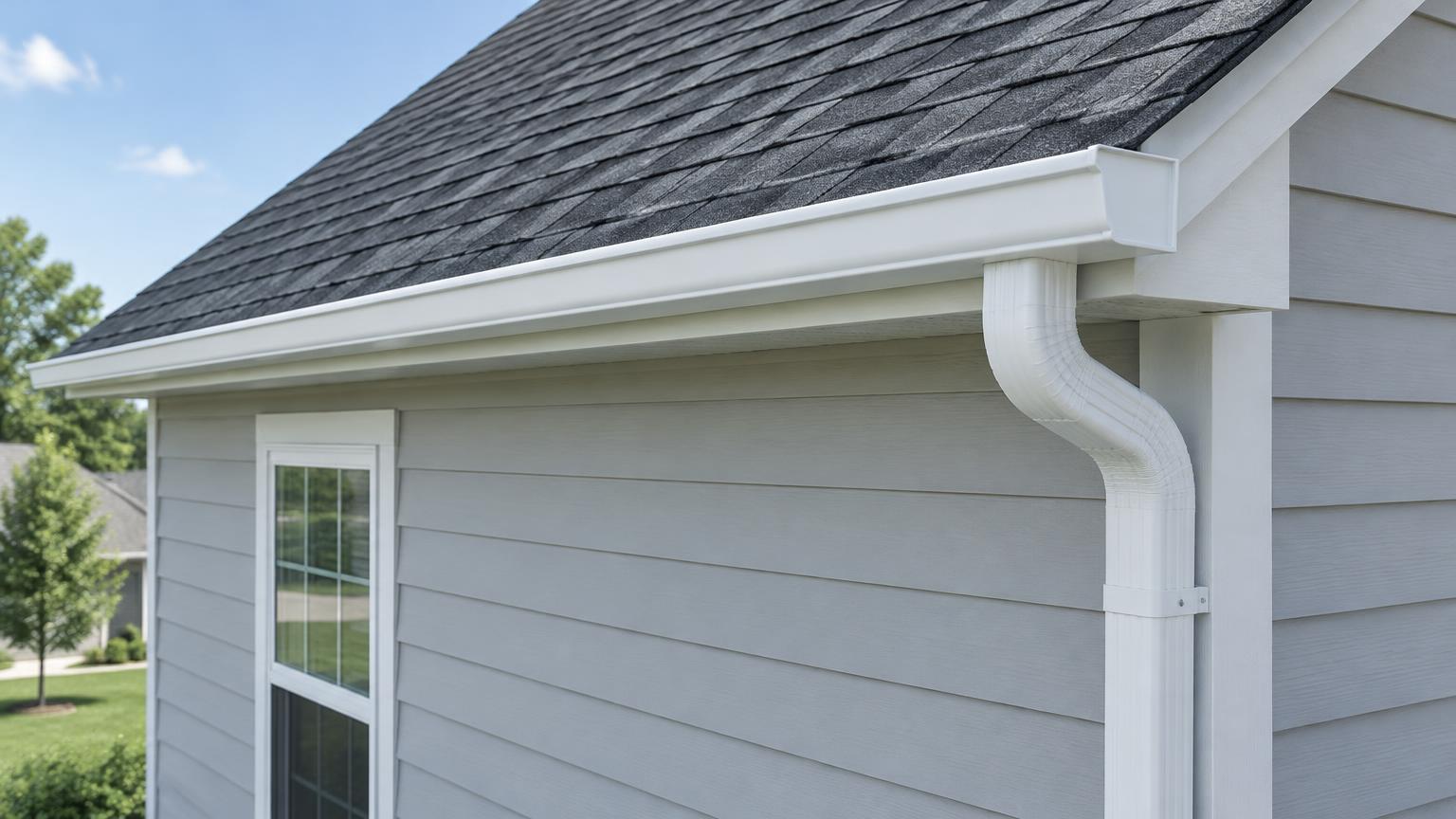
Follow the water from roof to ground
Gutter Installation in Topeka, KS
A gutter system should fit the roof that feeds it and the ground where it discharges. Our Topeka gutter installation service plans seamless aluminum or steel channels, outlets and downspouts to manage runoff around your property.
Size the system to the roofline, not a guess
Roof area, pitch and the way slopes converge determine how much water reaches each gutter run. A valley can concentrate runoff into one short section, while a long eave may need multiple outlets. Measuring only the length of the house misses these differences, so sizing should consider the contributing roof and the anticipated flow.
Channel capacity must work with downspout size, outlet placement and the planned fall along each run. Bigger gutters alone do not solve an undersized outlet or poor discharge location. We discuss the roofline and drainage layout together so the estimate describes a connected system rather than a collection of independently chosen parts.
If the roof is also changing, coordinate the gutter scope with roof replacement and edge planning.
Seamless aluminum and steel options
Seamless gutters use continuous lengths along individual runs, reducing the number of joints compared with short sectional pieces. Corners, end caps and downspout outlets still need connections and proper sealing. Aluminum is lightweight and resistant to rust, while steel offers another material option with coating and corrosion considerations that should be explained before selection.
Compare profiles, colors and material specifications alongside the fascia condition and hanger plan. A durable channel cannot perform well when its supports are attached to deteriorated wood. Ask what preparation is included and whether existing fascia problems require separate work before the new system can be securely installed.
Foundation protection starts with the discharge point
Collecting water at the roof edge is only half the job. Downspouts need to release runoff where it will not repeatedly soak the foundation perimeter, erode soil or cross a walking surface. The appropriate discharge arrangement depends on grading, landscaping and available drainage paths; one extension length does not fit every property.
Gutters help reduce concentrated water near walls and foundations, but they cannot guarantee a dry basement or correct every grading defect. Existing underground drains may also need evaluation by the appropriate specialist. Describe pooling areas and past water concerns so the proposed outlets account for the site's conditions rather than simply repeating the old layout.
Where runoff has affected exterior walls, also consider siding and wall moisture protection.
Recognize the signs, then plan the installation
Overflow during rain, sagging runs, separated joints and splash marks below an eave warrant a closer look. Clogs may be the cause, but inadequate fall, damaged supports or insufficient capacity can create similar symptoms. Watch from a safe ground-level location and note where water spills; avoid climbing a ladder in wet or stormy conditions.
The work begins with measuring roof edges, checking accessible support areas and choosing outlet locations. Existing gutters are removed as scoped, then new runs are formed and attached with compatible hangers and fittings. Final checks should address alignment, connections and the intended discharge route, with questions about any hidden fascia damage settled before extra work proceeds.
If water is entering behind the eave, request a roof-edge and leak assessment.
Keep Kansas runoff moving through the seasons
Heavy thunderstorms can overwhelm a blocked system quickly, and autumn leaves may obstruct outlets before winter arrives. Freezing conditions can compound existing drainage problems. Regular safe cleaning and inspection remain important after installation; accessories intended to reduce debris do not eliminate every maintenance task or resolve poor system sizing.
Kan Exteriors installs gutters in Topeka, Silver Lake, St. Marys, Lyndon and Eudora. Let us know about troublesome valleys, pooling near the house and any planned exterior changes. Your free estimate can then address the channel material and roofline capacity together with the route water takes after leaving the downspouts.
Gutter sizing and drainage questions
- Does seamless mean a gutter has no joints anywhere?
- No. Individual runs are continuous, but corners, end caps and outlets still require connections. Those details need appropriate fastening and sealing.
- How do you choose the gutter and downspout sizes?
- The contributing roof area, slope, concentrated flow and outlet layout guide capacity choices. Gutters and downspouts should be assessed together rather than sized independently.
- What should I compare between aluminum and steel gutters?
- Compare material thickness, finish, support requirements and corrosion considerations. Aluminum resists rust, while steel needs attention to its protective coating and condition.
- Will new gutters guarantee that my basement stays dry?
- No. They can help manage roof runoff, but grading, groundwater and foundation conditions may also contribute to moisture. Discharge planning should avoid concentrating water beside the building.
- Can damaged fascia hold a new gutter securely?
- Deteriorated support wood needs evaluation before installation. Ask whether fascia preparation is included and how any concealed damage will be documented and approved.