
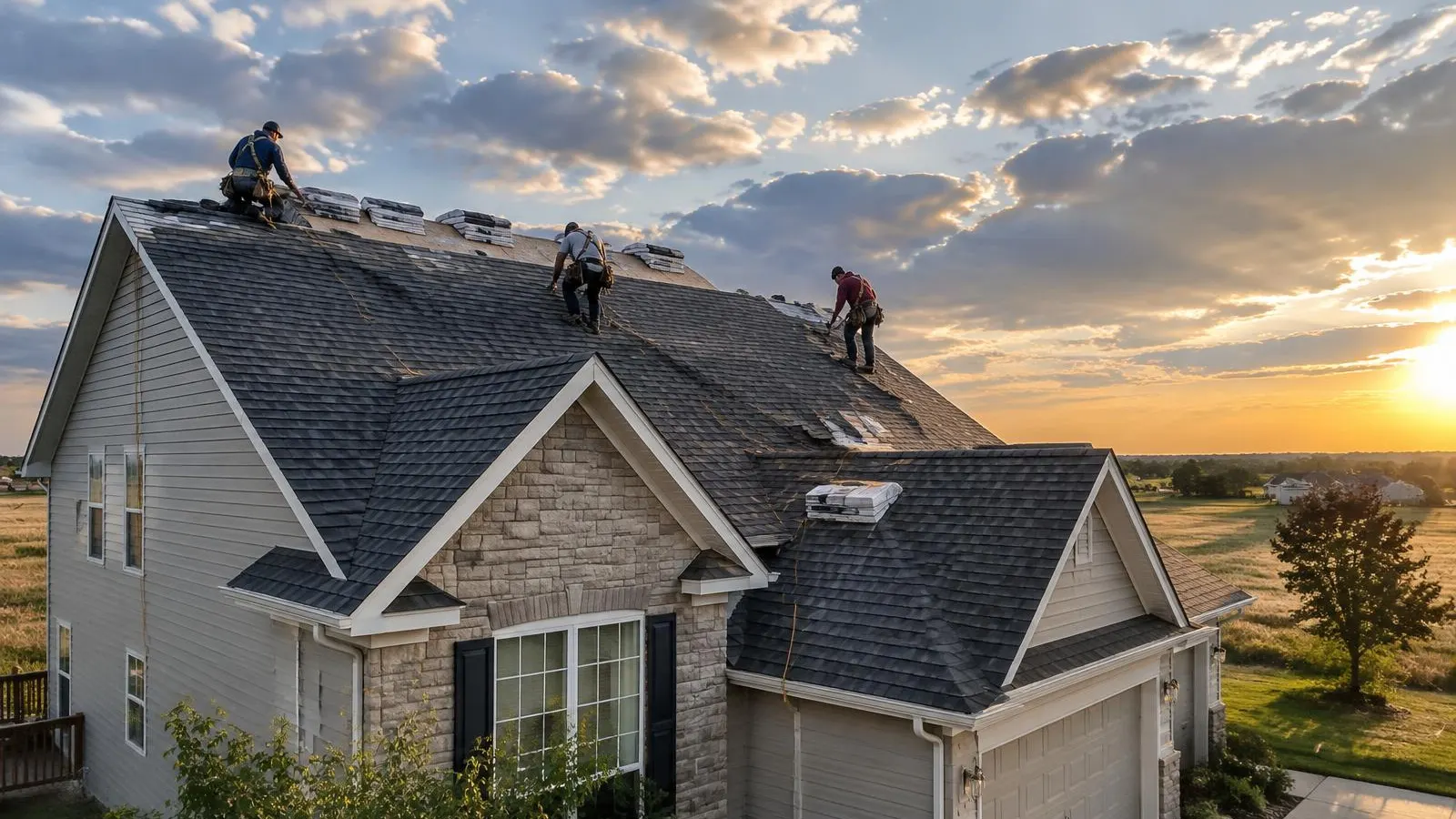
Profiles, colors and practical details
Asphalt Shingle Roofing in Topeka, KS
Choosing shingles means balancing the look of your Topeka home with the requirements of its roof. Compare styles, color blends and the supporting layers before choosing the surface you will see every day.
What an asphalt shingle roof is made of
Asphalt shingles typically combine a reinforcing mat, asphalt and a protective mineral-granule surface. They are installed in overlapping courses that shed water down a suitable pitched roof. The visible shingles are only one part of the assembly: underlayment, flashing, deck condition and ventilation also influence how the roof functions.
Roof slope matters when selecting this material. Asphalt shingles are not a universal covering for every low-slope area, and application requirements vary by product. Before comparing colors, confirm that the proposed roofing is appropriate for each portion of the building, including additions, porch roofs and transitions between differently pitched sections.
Compare profiles before comparing the price
Traditional three-tab shingles have a relatively uniform pattern, while architectural shingles use a layered profile with more visual depth. Other styles may create a heavier-looking texture. Availability and suitability depend on the product being considered, so ask to review specific options rather than assuming that every style has the same construction or installation requirements.
A material comparison should identify the actual product and the rest of the proposed roof system. Labels such as architectural or premium do not by themselves establish how a roof will perform on your home. If an impact-classified product is being discussed, review its documented rating and ask your insurer separately about any eligibility rules.
Color belongs in the whole-house picture
Look at samples alongside your siding, brick, trim and gutters. A shingle blend that looks subtle in a small sample may create a different pattern across a broad roof slope. Viewing choices in daylight helps, and the direction of the roof can change how light makes the color appear from the street.
Consider whether you are replacing every slope or repairing a limited section. Weathered shingles may no longer resemble a fresh sample, and an exact color match is not assured. When a patch is the actual need, the condition and compatibility of the existing covering matter as much as the new material's appearance.
For a smaller damaged section, investigate shingle roof repair options.
Installation details beneath the pattern
A stable deck provides the base for fastening, while the underlayment and flashing help manage water where the covering alone is not enough. Starter courses, roof edges, valleys and ridge details require the correct treatment for the chosen system. A neat shingle pattern cannot compensate for an unresolved leak path at a chimney or wall.
Fastener placement and installation conditions should follow the selected manufacturer's instructions. The surrounding attic also needs consideration because ventilation and moisture issues are not cured merely by changing the roof surface. During estimating, ask how these less-visible details are addressed and how any damaged deck sections will be handled.
See how these layers fit into a complete roof installation scope.
Shingles in northeast Kansas weather
Sun, gusty winds and hail all challenge Kansas roof coverings. A product rating is not a promise that damage cannot occur, and storm effects vary with intensity, exposure and the condition of the roof. Ground-level observations and periodic professional assessments can help identify lifted material or other changes before a larger concern is overlooked.
Kan Exteriors helps with asphalt shingle roofing in Topeka, Alma, Holton, Lawrence and Perry. Bring your color preferences and any concerns about the existing roof to a free estimate. We can discuss the proposed material alongside the practical details of your home, keeping appearance and roof-system requirements in the same conversation.
After severe weather, request hail inspection and storm damage help.
Choosing your asphalt shingles
- How do architectural shingles differ from three-tab shingles?
- Architectural shingles generally have a layered, dimensional appearance, while three-tab shingles present a more uniform pattern. Compare the specific products and application requirements rather than treating the style name as a performance guarantee.
- Can asphalt shingles cover a nearly flat porch roof?
- Not necessarily. Minimum slope and underlayment requirements depend on the product. A low-slope section may need a different roofing system, so its pitch should be assessed before material selection.
- Will a darker shingle look the same on every roof slope?
- Lighting, orientation and the product's color blend can change its appearance. Review physical samples outdoors alongside your exterior finishes before settling on a color.
- Are impact-classified shingles completely hail-proof?
- No. An impact classification describes performance under a particular test, not immunity to every storm. Ask for the chosen product's documented rating and avoid assuming it guarantees damage-free roofing.
- Should I select shingles before the roof is measured?
- You can begin with style preferences, but final selection should follow an assessment of pitch, condition and project scope. That helps ensure the proposed product suits the building and estimate.